
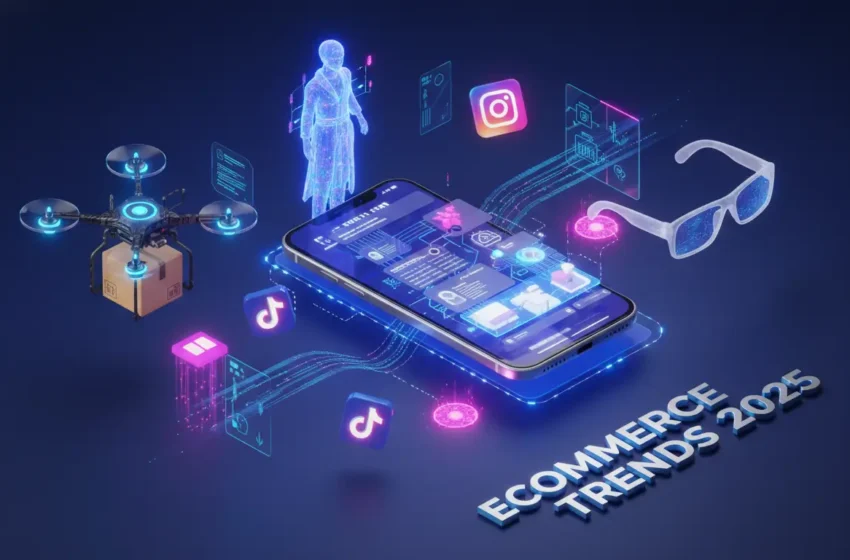
The world of online retail is evolving at lightning speed. Businesses that fail to keep up with the latest ecommerce trends risk losing customers to competitors who offer faster, smarter, and more personalized shopping experiences. In 2025, trends like AI-driven personalization, social commerce, augmented reality, and subscription-based models are shaping the way consumers interact with brands.
Global online sales are projected to surpass previous records, with mobile devices leading the charge and social platforms becoming powerful shopping channels. Understanding these online shopping trends is essential for businesses aiming to boost revenue, improve customer loyalty, and stay ahead in a saturated market.
From optimizing website performance to offering immersive experiences through AR, every small change can make a big difference in attracting and retaining customers. Retailers who leverage these ecommerce trends effectively can create frictionless shopping journeys that delight consumers at every step.
Businesses looking to integrate smarter personalization can explore our services.
For global market stats, check out the Statista Ecommerce Report.
AI and Personalization – The Future of Ecommerce
Artificial intelligence (AI) is no longer a futuristic concept in retail—it’s a core driver of modern ecommerce trends. By 2025, AI-powered personalization will redefine the online shopping experience, allowing businesses to anticipate customer needs and deliver highly relevant recommendations.
Personalized customer journeys are becoming the norm. From tailored product suggestions to dynamic landing pages, AI helps shoppers find exactly what they want faster. Online retailers that adopt AI can reduce friction during the buying process, increase conversion rates, and strengthen long-term customer loyalty. Businesses can even implement smart personalization strategies, like predictive analytics and AI-driven chatbots, to enhance engagement without overloading customer service teams.
Moreover, AI improves operational efficiency behind the scenes. Retailers can forecast demand, manage inventory more effectively, and optimize pricing in real time. Integrating AI into your ecommerce platform not only benefits customers but also improves overall profitability. For companies looking to stay ahead, leveraging AI in personalization is one of the most impactful ways to embrace online shopping trends.
Brands that have embraced AI-based personalization are already seeing measurable results—higher engagement, lower bounce rates, and more repeat purchases. If your business wants to tap into these advantages, exploring AI services is essential for keeping up with the rapid evolution of ecommerce trends.
For more insights on global ecommerce growth, Statista’s Ecommerce Report provides valuable market data and projections.
Social Commerce – Selling Where Customers Spend Their Time
Social media is no longer just a platform for engagement—it’s rapidly becoming a major sales channel. Social commerce is a leading force in 2025 ecommerce trends, allowing customers to discover, explore, and purchase products directly within platforms like Instagram, TikTok, and Facebook.
Influencer partnerships and user-generated content drive credibility and trust. When shoppers see a product showcased by someone they follow or trust, they are more likely to make an instant purchase. Features like Instagram Shop and TikTok Shopping remove friction by letting consumers buy without leaving the app, streamlining the path from discovery to conversion.
Interactive features such as live-streamed product demos, embedded brand pages, and AR-enabled try-ons create immersive shopping experiences. By blending entertainment and convenience, social commerce keeps users engaged longer and encourages impulse purchases. Companies that invest in these channels can not only boost revenue but also gather actionable insights about customer preferences, helping refine future campaigns.
Social commerce also complements AI-driven personalization. For example, products showcased on social platforms can be dynamically recommended based on a shopper’s past interactions, bridging the gap between engagement and conversion. Businesses that want to implement these strategies can leverage advanced AI services to automate product recommendations and optimize social commerce campaigns, ensuring they stay ahead in the rapidly evolving world of online shopping trends.
Emerging Payment and Fulfillment Models
In 2025, ecommerce businesses must adapt to evolving payment and fulfillment models to stay competitive. Consumers now expect flexibility, speed, and convenience at every step of their buying journey.
Buy Now, Pay Later (BNPL) has surged in popularity, allowing customers to make large purchases without the immediate burden of full payment. This payment flexibility not only increases average order values but also improves conversion rates. Alongside BNPL, mobile wallets, credit cards, and digital payment platforms continue to dominate, highlighting the need for multiple payment options tailored to customer preferences. Understanding what methods your audience prefers is crucial for reducing shopping cart abandonment and driving sales.
Fulfillment strategies are also evolving rapidly. Fast shipping remains a must, but businesses are now offering same-day delivery, curbside pickup, and even drone-based or autonomous delivery options. Advanced supply chain management and real-time inventory tracking—often powered by AI—help retailers meet these expectations efficiently while keeping operational costs under control.
Additionally, seamless returns processes are increasingly important. Consumers expect hassle-free returns with easy labeling and tracking, which enhances satisfaction and builds long-term loyalty. Companies can leverage composable commerce architectures to integrate specialized logistics microservices, enabling quick scaling of fulfillment operations without disrupting existing systems.
By embracing innovative payment options and agile fulfillment models, businesses not only improve customer satisfaction but also strengthen their competitive edge in the ever-growing ecommerce landscape.
Sustainability, Ethics, and Social Responsibility in Ecommerce
Modern consumers aren’t just looking for convenience—they increasingly value ethical practices, sustainability, and social responsibility when choosing where to shop. Ecommerce businesses that prioritize these factors can differentiate themselves, build trust, and foster long-term loyalty.
Transparent Supply Chains are becoming a key expectation. Brands leveraging blockchain or advanced analytics can track products from manufacturing to delivery, providing consumers with insights into the origin, labor practices, and environmental impact of each item. This transparency builds credibility and aligns with the growing demand for responsible consumption.
Eco-Friendly Packaging & Shipping also plays a critical role. Reducing wasteful packaging, offering recyclable materials, or opting for carbon-neutral delivery options resonates strongly with environmentally conscious shoppers. These small but visible actions enhance brand perception while contributing to broader sustainability goals.
Circular Economy Models—including subscription, rental, and resale platforms—are gaining traction. By integrating composable commerce microservices for subscription management or user-generated product listings, businesses can participate in the circular economy, encouraging product longevity and repeat engagement.
Importantly, sustainability initiatives can also have financial benefits. Brands that implement efficient packaging, consolidate shipments, and optimize logistics not only reduce their carbon footprint but also cut operational costs. Combined with AI-driven personalization to match supply with demand, businesses can maintain profitability while promoting ethical practices.
By embedding sustainability, ethics, and social responsibility into the core of operations, ecommerce brands meet the expectations of socially conscious consumers, strengthen their market positioning, and create a more resilient business model.
Data-Driven Personalization and AI in Ecommerce
In 2025, AI-powered personalization is no longer optional—it’s expected. Modern ecommerce shoppers want experiences tailored to their preferences, and businesses that leverage data effectively can turn browsing into conversions.
Hyper-Personalized Shopping Journeys: Using AI algorithms, ecommerce platforms can analyze browsing history, purchase patterns, and demographic data to deliver product recommendations, dynamic content, and targeted offers. This reduces friction in the buying process and increases average order values. Retailers implementing these techniques have seen substantial improvements in conversion rates and customer retention.
Smarter Customer Support with AI: Chatbots and virtual assistants powered by natural language processing (NLP) provide 24/7 customer support, answer complex queries, and guide users through purchase decisions. AI-driven support reduces reliance on call centers, speeds up response times, and enhances the overall user experience.
Operational Efficiency Through Predictive Analytics: AI also optimizes inventory management, demand forecasting, and supply chain operations. By predicting product demand accurately, businesses can minimize overstocking or stockouts, reduce operational costs, and ensure customers receive products on time.
Seamless Integration with Ecommerce Platforms: Modern composable commerce architectures allow businesses to integrate AI microservices without overhauling entire systems. This flexibility enables rapid experimentation with recommendation engines, personalized emails, and loyalty programs, keeping brands agile and competitive.
Internal capabilities like these can be complemented with AI services that help implement smart personalization, ensuring the system adapts continuously to evolving consumer behavior. Meanwhile, according to the Statista Ecommerce Report, brands leveraging personalization see significantly higher engagement and repeat purchases, confirming that data-driven strategies are a key differentiator in the competitive ecommerce landscape.
By embracing AI and data-driven personalization, ecommerce brands can create hyper-relevant experiences, foster customer loyalty, and position themselves ahead of competitors as the industry continues to evolve.
Social Commerce and Omnichannel Integration
Social media has evolved from a marketing channel to a direct sales platform, making social commerce one of the fastest-growing ecommerce trends in 2025. Platforms like Instagram, TikTok, and Facebook allow users to discover, explore, and purchase products without leaving the app, blurring the line between content and commerce.
Influencer and Brand Collaboration: Partnering with influencers helps brands reach niche audiences with built-in credibility. When a follower sees a product recommended by a trusted influencer, the likelihood of instant purchase increases. Social commerce leverages interactive shopping features, live streams, and in-app product demos to create immersive experiences that drive engagement.
Omnichannel Strategy: Modern consumers expect a seamless shopping experience across all touchpoints—websites, mobile apps, social platforms, in-store kiosks, and emerging devices like smart TVs or AR headsets. By integrating social commerce with other channels, brands ensure consistent messaging, real-time inventory updates, and personalized experiences regardless of how customers choose to interact.
Driving Revenue and Engagement: Data shows that businesses using social commerce see higher engagement and conversion rates. Rapid insights from user interactions across platforms allow brands to fine-tune campaigns, recommend products more effectively, and increase repeat purchases. Combining this with AI-driven personalization creates a powerful ecosystem where online shopping trends are fully leveraged.
Practical Example: A fashion brand can run a TikTok live shopping event showcasing new arrivals. Viewers can instantly purchase featured items, receive personalized recommendations, and even access loyalty rewards—all without leaving the app. Simultaneously, inventory is synchronized across the website and mobile app, ensuring stock accuracy and a smooth fulfillment process.
By embracing social commerce and omnichannel strategies, ecommerce brands not only boost sales but also enhance customer experience, loyalty, and brand visibility, keeping them ahead in a highly competitive market.
Emerging Payment Methods and Flexible Fulfillment
In 2025, online shoppers expect convenience, speed, and flexibility not just in browsing but also during payment and delivery. Offering multiple payment options and agile fulfillment methods is no longer optional—it’s a critical component of modern ecommerce trends.
Multiple Payment Options:
Consumers increasingly prefer digital wallets, Buy Now Pay Later (BNPL), contactless payments, and even cryptocurrencies alongside traditional credit cards. Providing these options reduces friction at checkout, lowers cart abandonment rates, and enhances customer satisfaction. For example, Gen Z shoppers often favor wallets like Apple Pay and Google Pay, while older demographics might still rely on cards or PayPal.
Flexible Fulfillment Models:
Rapid delivery and transparent logistics are key differentiators. Retailers now adopt a mix of same-day delivery, curbside pickup, locker-based drop-offs, and drone deliveries, supported by AI-driven inventory management. This ensures orders reach customers on time while optimizing supply chain efficiency.
Seamless Returns and Customer Experience:
Returns have become a major factor in brand loyalty. Implementing streamlined returns processes—from automated labels to instant refunds—enhances customer trust and encourages repeat purchases. Composable commerce platforms allow retailers to integrate specialized microservices for returns, tracking, and refunds without disrupting other systems.
Data-Driven Insights:
By analyzing online shopping trends and customer preferences, businesses can predict demand, adjust stock levels, and offer personalized fulfillment options. Combining AI-driven analytics with flexible payment and delivery solutions ensures frictionless experiences, driving higher conversion rates and repeat business.
Practical Example:
A consumer orders a smartwatch online using a BNPL option. The system automatically selects the nearest warehouse with available stock and arranges same-day delivery via a drone courier. The customer receives live tracking updates and can initiate a hassle-free return if needed.
By prioritizing flexible payment options and innovative fulfillment models, ecommerce brands meet evolving customer expectations, reduce friction, and stand out in the competitive online marketplace.
Sustainability, Ethics, and Social Responsibility in Ecommerce
Modern consumers increasingly consider environmental impact, ethical sourcing, and social responsibility when choosing brands. These factors are becoming crucial ecommerce trends that directly influence purchasing decisions and brand loyalty.
Sustainable Practices: Eco-conscious shoppers prefer brands that minimize packaging waste, use recycled materials, and implement energy-efficient logistics. Companies embracing carbon-neutral shipping, biodegradable packaging, and circular supply chains not only protect the planet but also appeal to a growing segment of conscious consumers.
Ethical Sourcing and Fair Labor: Transparency in sourcing—such as ethically produced clothing or cruelty-free products—builds trust. Brands that publicly share their supply chain practices demonstrate accountability, fostering loyalty and long-term engagement.
Social Responsibility Initiatives: Shoppers increasingly support businesses that actively contribute to their communities. Initiatives like donations per purchase, local employment programs, or partnerships with charitable organizations resonate with modern audiences and strengthen brand reputation.
Consumer Awareness and Behavior: According to recent Statista reports, consumers are more likely to abandon brands that don’t align with their values. Integrating sustainability and ethical practices isn’t just morally responsible—it’s a competitive advantage in the ecommerce landscape.
Practical Example: An online apparel brand offers 100% recycled packaging, sources cotton from certified fair-trade farms, and donates a portion of profits to environmental causes. Shoppers feel good about purchasing, resulting in higher engagement, repeat purchases, and organic word-of-mouth promotion.
By adopting sustainable, ethical, and socially responsible practices, ecommerce businesses can differentiate themselves, appeal to conscious consumers, and stay ahead in the evolving market.
The Future Outlook – AI, Metaverse, and Beyond in Ecommerce
As ecommerce trends evolve, the next frontier goes beyond traditional online shopping. Innovations like artificial intelligence (AI), augmented reality (AR), virtual reality (VR), and even the metaverse are shaping how consumers interact with brands and make purchases.
AI-Driven Personalization: AI continues to be a cornerstone of modern online shopping. By analyzing customer behavior, preferences, and purchase history, retailers can offer hyper-personalized product recommendations, dynamic pricing, and predictive inventory management. Businesses integrating AI for smarter personalization see higher conversion rates and improved customer satisfaction.
Augmented Reality (AR) and Virtual Try-Ons: AR technology allows consumers to visualize products in their real environment, enhancing confidence before purchase. For example, furniture stores enable users to see how a sofa fits in their living room, while fashion brands let customers virtually try on apparel and accessories. AR improves engagement, reduces returns, and increases purchase likelihood.
The Metaverse and Immersive Shopping: The metaverse introduces a fully interactive digital shopping experience, where consumers can browse virtual stores, attend product launches, and interact with avatars. Early adopters of metaverse commerce gain a competitive edge, offering unique experiences that blend entertainment and shopping.
Voice Commerce and Smart Assistants: Voice-activated shopping is growing rapidly, with devices like Alexa, Siri, and Google Assistant enabling hands-free purchasing and personalized recommendations. Optimizing for voice search and conversational commerce is becoming a key trend for ecommerce businesses seeking accessibility and convenience.
Data Privacy and Ethical AI: While leveraging advanced technologies, brands must prioritize data protection and ethical AI usage. Compliance with GDPR, CCPA, and other privacy regulations ensures consumer trust and long-term loyalty.
Future-Proof Strategies: To stay ahead, ecommerce brands should experiment with AI, AR/VR, voice commerce, and metaverse experiences while maintaining a strong foundation in sustainable, ethical, and consumer-centric practices. This approach positions companies to thrive in a rapidly changing digital marketplace.
Frequently Asked Questions (FAQ) About Ecommerce Trends in 2025
1. What are the current ecommerce trends?
The latest ecommerce trends include AI-driven personalization, social commerce, AR/VR shopping experiences, mobile-first design, and subscription-based models. Online shopping trends also highlight faster delivery, multiple payment options, and sustainability-focused practices. Businesses adopting these trends can deliver a more engaging, customer-centric experience.
2. How is AI shaping ecommerce trends?
AI is transforming ecommerce trends by enabling personalized product recommendations, smarter chatbots, predictive analytics, and automated inventory management. Brands integrating AI-driven personalization improve conversion rates, reduce cart abandonment, and strengthen customer loyalty.
3. Why is social commerce important in 2025?
Social commerce is rapidly becoming a core component of online shopping trends. Platforms like Instagram, TikTok, and Snapchat allow users to purchase products directly while browsing social content. Brands leveraging social commerce can boost engagement, reach niche audiences, and increase sales through influencer collaborations and interactive content.
4. How can AR and VR enhance ecommerce?
Augmented reality (AR) and virtual reality (VR) provide immersive shopping experiences. Customers can virtually try on products, visualize furniture in their home, or test gadgets before buying. Integrating AR/VR aligns with modern ecommerce trends and encourages higher purchase confidence, ultimately driving revenue growth.
5. What role does sustainability play in ecommerce trends?
Consumers increasingly favor brands that prioritize sustainability. Eco-friendly packaging, ethical sourcing, carbon footprint reduction, and circular economy models are part of emerging online shopping trends. Retailers embracing sustainability gain trust, improve brand reputation, and appeal to socially conscious buyers.
6. How important are multiple payment options in ecommerce?
Offering diverse payment options, including credit cards, digital wallets, Buy Now Pay Later (BNPL), and cryptocurrencies, is crucial for modern ecommerce trends. Flexible payments reduce cart abandonment, improve customer satisfaction, and cater to younger audiences like Gen Z, who prefer multiple payment methods.
7. What is composable commerce and why does it matter?
Composable commerce allows businesses to build flexible, modular ecommerce platforms using microservices for payments, analytics, search, and logistics. This approach aligns with current ecommerce trends, enabling faster feature deployment, no vendor lock-in, and seamless integration with evolving technologies.
8. How can businesses track and adapt to emerging ecommerce trends?
Staying competitive requires continuous monitoring of market insights and online shopping trends. Reports like the Statista Ecommerce Report provide valuable data on consumer behavior, payment methods, and market growth. Businesses can use these insights to refine strategies, implement AI personalization, and adapt to evolving customer expectations.
Conclusion
The world of online retail is evolving faster than ever, with ecommerce trends shaping how businesses connect with customers, streamline operations, and drive growth. From AI-driven personalization to social commerce, AR/VR experiences, and sustainable practices, these innovations define the future of shopping. Businesses that stay ahead of these trends, embrace technology, and focus on customer-centric strategies will not only increase conversions but also build lasting brand loyalty.
By understanding and implementing these online shopping trends, retailers can create seamless, engaging, and personalized experiences that meet modern consumer expectations. Staying informed with market insights, like the Statista Ecommerce Report, and integrating smart solutions ensures your business remains competitive in an ever-changing ecommerce landscape.
The key takeaway? Adapt, innovate, and prioritize the customer experience—these are the driving forces behind success in today’s ecommerce world.